Write July 14 beside 2026 for a Personal Year example, then add the digits in two parts. The birthday gives 1 + 4 + 0 + 7 = 12, which reduces to 3. The year gives 2 + 0 + 2 + 6 = 10, which reduces to 1. Together, 3 + 1 = 4.
That fictional birthday has a 2026 Personal Year of 4 in the single-digit method used here. The calculation is something you can check. The meaning attached to 4 is a numerology interpretation: a theme for reflection, rather than a forecast that tells you when to launch, fall in love or change your work.
Calculate your 2026 Personal Year
In short: Your 2026 Personal Year combines your birth day and birth month with the digits of 2026, then reduces the result using a stated numerology method. This guide reads the single-digit result from 1 to 9 as an optional theme, with no guaranteed personal outcome.
Start with the month and day of your birthday; your birth year isn’t used in this calculation. Add their digits, then reduce that total if needed. Next, reduce 2026: 2 + 0 + 2 + 6 = 10, followed by 1 + 0 = 1. Add the two reduced results and reduce again to a digit from 1 to 9.
Birthday: 1 + 4 + 0 + 7 = 12 → 1 + 2 = 3.
2026: 2 + 0 + 2 + 6 = 10 → 1 + 0 = 1.
Personal Year: 3 + 1 = 4.
You can check the same result by adding all the displayed digits together: 1 + 4 + 0 + 7 + 2 + 0 + 2 + 6 = 22, then 2 + 2 = 4. The single-digit result agrees. Keeping the method visible helps you spot an arithmetic mistake before interpreting the number.
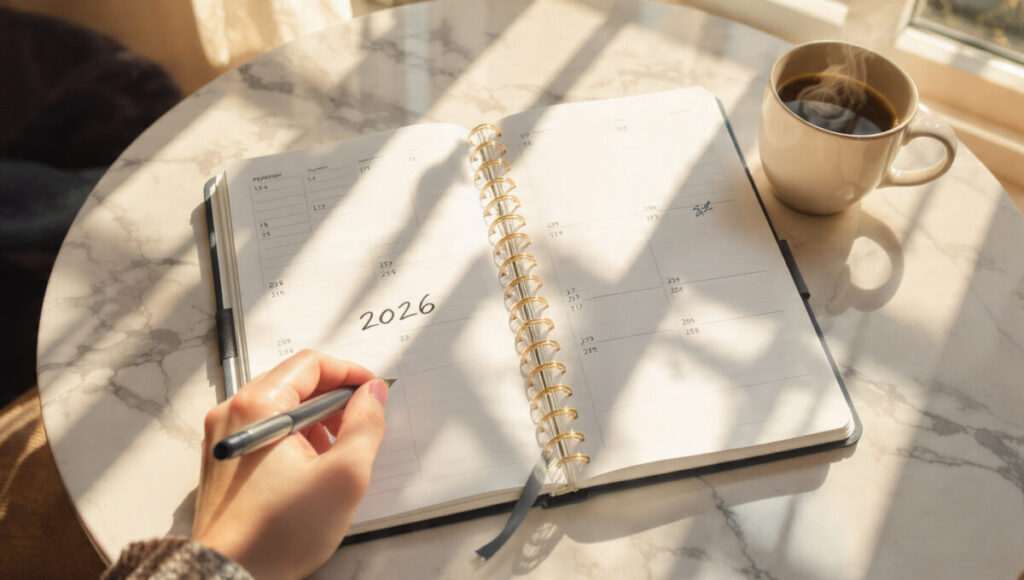
A calculation on the page can be checked independently of the meaning you choose to explore.
If you also read 11 or 22
A guide that keeps 11 or 22 as “master numbers” may handle an intermediate total differently. In the example above, adding all the digits produces 22 before reducing to 4. You could read that as 22/4 within a method that retains it, while this guide begins with 4.
State the choice rather than trying to make every approach produce the same label. A master-number interpretation can add a theme you enjoy, but it doesn’t impose a greater spiritual duty or establish that your year will be more important than somebody else’s.
For the wider number toolkit, numerology for beginners explains calculations and conventions. Your Personal Year is different from a Life Path number, which uses your full birth date; the Life Path guide walks through that separate method.
Numbers 1 to 9, as themes you can choose to explore
The following meanings are the symbolic approach used in this guide. Read the theme, then notice whether the question fits your circumstances. A number doesn’t set your personality, determine how other people behave or prevent you from choosing another focus.
1: Make a beginning visible
The 1 theme is a beginning. You might have a project, invitation or decision you’d like to give a first form. A visible step could be asking a question, sharing a draft or finding the information needed to begin.
Keep the scale realistic. You don’t have to launch everything at once or accept a risk to prove decisiveness. Ask: “What would count as a useful beginning for this particular idea?”
2: Hear both sides of an exchange
The 2 theme is cooperation. In a relationship or project, you might want to understand what each person expects before making an arrangement. Listening can sit beside expressing your own preference.
Agreement isn’t the only acceptable result. You may discover different wishes or a limit that matters. Ask: “What would make this exchange feel mutual, and what do I need to say?”
3: Give an idea a form
The 3 theme is expression. A conversation, a drawing, a short piece of writing or an activity with friends might be a way to explore it. Choose a form you actually enjoy, rather than one you think you should perform.
You don’t need applause to make the experiment worthwhile. A first version may help you find the next question. Ask: “What would I like to express, and who, if anyone, would I like to share it with?”
4: Build a workable foundation
The 4 theme is structure. You could look at a routine, a practical skill or an arrangement that would support something important. A useful foundation fits the person living with it.
Leave room to adjust. Fatigue doesn’t prove you’re on the right path, and a rigid schedule isn’t required. Ask: “What small arrangement would make this easier to return to?”
5: Test a change with room to reconsider
The 5 theme is variety. You might try an activity, explore a new place or change one part of a familiar task. Curiosity can be enough reason to investigate, without promising that change will raise your energy.
Consider the cost and scope before a larger experiment. You can learn from something that doesn’t suit you. Ask: “What would I like to try, and how will I know whether I want to continue?”
6: Notice care in everyday life
The 6 theme is care. You could reflect on the support you offer, the support you need or the ordinary surroundings you’d like to enjoy more. It needn’t become another responsibility to carry alone.
In a relationship, care includes room for both people’s wishes and capacity. Ask: “What would make this part of life more considerate, and who needs to be included in the conversation?”
7: Give a question time
The 7 theme is inquiry. You might want to read, learn or think about something before deciding. A quieter interval can be a personal preference, without becoming a rule to withdraw from everyone.
Decide what you’d like to find out and when you might return to the question. Ask: “What information is missing, and where could I look for it?” You can also choose company while you investigate.
8: Look at ambition and responsibility together
The 8 theme is responsibility around resources, work and influence. You could review what a project needs, what has been agreed or how you want to use an opportunity. A number doesn’t guarantee wealth or justify a financial risk.
Relevant facts and appropriate advice still matter. Ask: “What does this choice involve, and what would a fair, realistic arrangement look like?” Ambition can include recognising a limit.
9: Consider what is ready to finish
The 9 theme is completion. You might finish a small project, organise a handover or decide what to do with an old plan. That doesn’t mean every relationship or chapter must end during the year.
You can keep an experience that still matters to you. Ask: “What is genuinely complete, and what needs continued care?” The answer may be much smaller than the dramatic ending a symbolic reading suggests.
Love: use the number to find a question

An ordinary conversation can explore what each person wants. Different Personal Year numbers don’t establish compatibility or decide the relationship’s direction.
For a couple, a theme might start a conversation. A 2 lens could suggest listening to both sides; a 4 lens could suggest a practical arrangement; a 5 lens could invite a small shared novelty. Choose the question that fits, even if it isn’t attached to either person’s number.
Find a time that suits you both and share two things: something you appreciated, and something you’d like to discuss or try. There’s no magic twenty-minute duration or required weekly quota. A conversation needs consent and attention, rather than a numerology timetable.
If you’re single, a number doesn’t tell you where you must meet somebody or when you should become available. You can choose an invitation you’re curious about or enjoy your own plans. Our relationship suitability guide looks at real-world care and shared effort once a connection is involved.
Career and projects: bring the theme back to facts

A quiet moment can leave room to consider a project. The number doesn’t determine a launch date or whether a career move will succeed.
Suppose the 4 theme appeals to you and you’re considering a course. The useful question might concern a timetable, an entry requirement or the time you’d need to study. Finding out those details gives you more to work with than assuming the year requires a qualification.
With an 8 theme, you might want to clarify a project’s scope or cost. With a 3, you might enjoy sharing a draft. These are optional interpretations. Relevant workplace agreements, financial information and professional advice take priority where the decision needs them.
You could organise a project around one goal, a few realistic milestones and a moment to review what you’ve learned. Change the framework if it becomes too demanding. It isn’t a formula that prevents burnout or guarantees a result.
An optional Personal Month calculation
If you want a smaller calendar reference, the method used here adds the month number to your single-digit Personal Year and reduces again. A Personal Year 4 in July gives 4 + 7 = 11, then 1 + 1 = 2. We read 2 first, consistent with the single-digit approach above.
Treat that monthly theme as another question you can choose, rather than a command to postpone work or a relationship conversation. The calendar doesn’t need to control the decision. You can also keep the annual theme alone and leave monthly calculations out.
Looking further ahead, the numerology 2027 guide explains the next year’s Universal Year calculation and a separate Personal Year example. Keep the year you’re calculating clear; the wider year number and your birthday-based result aren’t interchangeable.
An eight-week experiment you can adapt
An eight-week routine can be a way to revisit a chosen question, with no promise that a fixed schedule will transform you. You can shorten it, pause it or use a different timescale.
First two weeks: choose the focus
Pick a theme and one ordinary question. A 4 might ask about a workable routine, a 2 about a shared arrangement or a 7 about missing information. Write why the question matters to you and what you’d like to find out.
Middle weeks: notice what actually happens
Try the choice when it fits your circumstances, and keep a small note if that helps. You might record a conversation, a practical answer or a change of preference. Missing a planned session isn’t evidence that you’ve resisted the number’s rhythm.
Last two weeks: keep, change or stop
Review the notes and decide whether the focus still suits you. You can keep an arrangement, change the question or stop the experiment. Share a thought with someone if you want to, without claiming that speaking about it guarantees closure.
Key takeaway: Check the arithmetic, name the method and keep the meaning optional. Your Personal Year can prompt a useful question; your circumstances and choices guide the answer.
If you’d enjoy a numerology conversation, prepare a question about your own options. The ethical reading guide explains useful limits. A consultation can offer a perspective without guaranteeing compatibility, financial success or a particular outcome for the year.
Questions about your Personal Year calculation
How do I calculate my 2026 Personal Year?
Add the digits of your birth day and month, reduce, then add the reduced 2026 value of 1 and reduce again. The worked July 14 example gives birthday 3 plus year 1, resulting in 4.
Does my birth year belong in this calculation?
No, not in the method used here. It uses birth day, birth month and the year being considered. A Life Path calculation uses the full birth date and answers a different numerology question.
What if I get 11 or 22?
State whether your method retains them. This guide reads the single-digit result first. July 14 and 2026 add directly to 22, which reduces to 4; a retaining method may describe that as 22/4.
Does the year start in January or on my birthday?
This guide uses the 2026 calendar year. If you use a birthday-based approach elsewhere, note that different convention rather than silently switching methods midway through an interpretation.
Can I fail my Personal Year?
No personal failure is established by the number. It supplies an optional symbolic theme, not a test you must pass or a rhythm you’re punished for resisting.
What if my partner has a different number?
Use any themes you enjoy as conversation prompts. The numbers don’t establish compatibility or assign one person a permanent role. Ask what each of you actually wants.
Does a Personal Year 8 promise money?
No financial result is guaranteed. The resource theme may prompt practical questions, while relevant facts and appropriate professional advice guide actual decisions.
About the Author
The Esmeralda Chat editorial team writes about relationships, tarot, astrology and spiritual self-reflection. We pair traditional symbolism with practical questions, keeping your own choices at the centre.
Disclaimer: This article is for entertainment and self-reflection purposes. It doesn’t replace medical, legal, financial or mental health advice.